
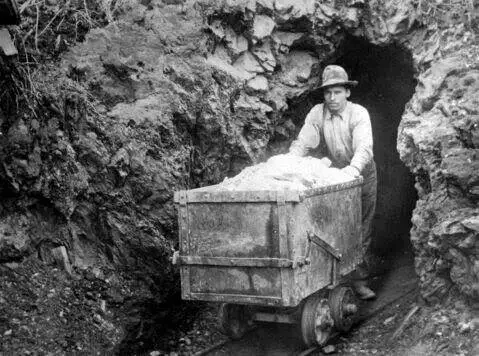
Vancouver-based Sasquatch Resources is proposing to extract valuable minerals from the waste rock left over from mining operations there decades ago in an environmentally friendly way, while cleaning up the site at the same time. (Photo courtesy of Sasquatch Resources.)
Source: Victoria News
Written By: Robert Barron
Work may begin soon on a project that would see the processing of large quantities of waste rock on Mount Sicker, left over from mining operations that occurred on the mountain from 1895 to 1915, for valuable minerals.
As well, the project, proposed by the Vancouver-based mineral exploration firm Sasquatch Resources, would also involve a major clean-up of the site where more than 300,000 tonnes of sulphide-bearing waste rock was left exposed when the mining ceased.
After years of research and study of the site, Sasquatch is now working with local regulators to determine the best path forward.
“Ultimately, the project aims to clean up long-standing environmental hazards while responsibly recovering valuable minerals already left behind, helping strengthen B.C.’s critical mineral supply without building new mining infrastructure,” Sasquatch said in a statement.
There are massive piles of waste rock on the mountain left from the Tyee, Lenora and Richard III mines, in places as much as 50 feet high, and Sasquatch has confirmed through sampling that enough copper, gold, silver and zinc has been left behind in the waste rock from the old mining processes that they have considerable potential value today.
Sasquatch said mobile ore-sorting equipment would separate metal-rich material from lower-grade waste rock, and the resulting concentrate would be transported off-site to existing licensed facilities for further processing.
“Revenue from concentrate sales would help offset the cost of waste removal and site stabilization,” the company said.
“It could also create local employment and economic activity tied directly to environmental restoration.”
In 2023, Pete Smith, Sasquatch’s CEO, said the older mining methods that were used at the time when the mines were active were not anywhere near as efficient as they are today.
He said mineral extraction from the processed ore was lower, and miners were less concerned about ensuring that all the higher-grade ore ultimately made it to the processing facility, leaving a significant amount behind in the waste rock.
Sasquatch said that research has also shown there is potential to remove in excess of 95 per cent of sulphide-related contaminants from tested waste rock, and university researchers from B.C., in partnership with the company, are conducting on-site water sampling and metals analysis to support ongoing environmental assessments at the site.
“For decades, cleanup (of the site) has been discussed, and now, a coordinated, evidence-led proposal is moving forward,” Sasquatch said.
“For the first time in more than a century, the company is organizing engineers, scientists, students, Indigenous partners, and reclamation specialists around a single path forward.”
The mining process that Sasquatch is proposing is limited to crushing and sorting, without chemicals or new waste streams, and recycles water on site.
“Cleanup is built directly into the project’s approvals, linking material recovery to land rehabilitation,” Sasquatch said.
“By targeting a site with substantial waste and existing infrastructure, the model aims to reduce environmental risk, stabilize the hillside, and create conditions for reclamation and natural regrowth to begin at Mount Sicker.”
Sasquatch said that, in addition to environmental remediation, the project would also address long-standing physical dangers at the site, securing or closing open mine shafts, stabilizing disturbed areas, and mitigating other hazardous remnants of the past mining activity.
“And, while Mount Sicker may be the starting point, it is not an isolated case,” Sasquatch said.
“According to Geoscience BC, there are up to 2,000 legacy mine sites across the province. If this model proves effective, it could open the door to addressing historic waste and environmental risk at other sites.”