
Written By: David Lawes
Source: Waste Advantage Magazine
As more states consider their own EPR laws, they should look closely at what the lubricant industry has built. When it comes to EPR, one size does not fit all, and the systems that perform best are those designed by the people who know the materials best.
By David Lawes
When Colorado approved the first industryled Extended Producer Responsibility, or EPR, plan for lubricant and automotive packaging in early 2024, it quietly made history. For the first time in the U.S., producers of bottles, pails, and drums used for lubricants can comply with the regulation through a dedicated, sector-specific system rather than a general consumer packaging program. The decision recognizes what the lubricant sector has long known: not all packaging is created equal.
The Challenge of Lubricant Packaging
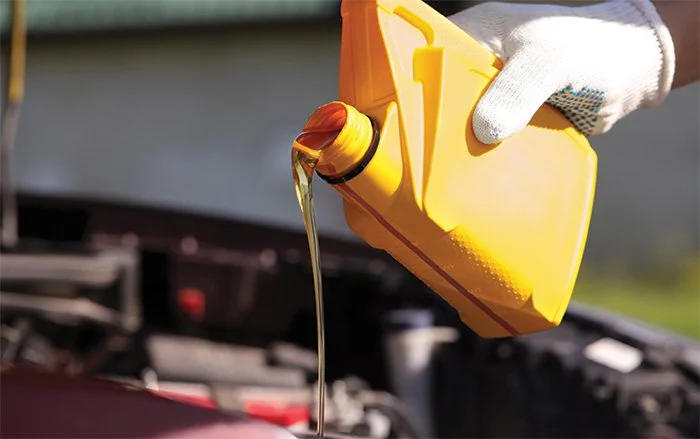
EPR is reshaping how industries manage waste, but one-size-fits-all systems rarely work. Lubricant packaging shows why. These containers are heavier, made from industrial-grade high-density polyethylene, and designed to withstand transport, temperature shifts, and chemical exposure. After use, they retain trace amounts of lubricant that municipal recycling systems are not equipped to manage.
These characteristics create three major challenges: residual product, industrial-grade design, and stringent end-market requirements. Together, they make conventional residential systems a poor fit and reinforce the need for specialized infrastructure. Trying to place this material into a general producer responsibility model would result in contamination, inefficiency, and poor recovery economics. A targeted, sector-specific system offers a more practical approach.
Traditional producer responsibility organizations are designed for residential materials. They are excellent at collecting bottles and cans, but lack the specialized infrastructure needed to recover lubricant packaging efficiently. The industry needed its own network, and Colorado’s legislation gave producers that opportunity.
A Unified Network
By allowing producers to comply through an Independent Program Plan, the Colorado Department of Public Health and Environment enabled industry to design a recovery system tailored to its specific materials and operational realities, as long as the program meets measurable outcomes and transparent reporting standards.
Interchange 360’s program plan, approved in 2025, applies this principle to lubricant and automotive packaging by connecting existing collection sites, haulers, and processors into a unified, audited network. Interchange 360 is the operational and compliance brand used to deliver multi-state EPR programs for petroleum and automotive packaging, and it is a trademark of the Lubricants Packaging Management Association, the nonprofit legal entity that provides governance and oversight. Containers are collected at service stations, quick-lube centers, public depots, and distributors rather than curbsides, then drained, bulked, and transported to facilities equipped to manage plastics that have held lubricants. There, they are cleaned, shredded, and re-extruded into clean HDPE resin for new industrial applications such as pails, pipe, and molded products.
In Colorado, Interchange 360 adapts this model to the U.S. by integrating American recyclers and transporters into the same cohesive system, supported by transparent reporting and third-party oversight. The result is not only compliance, but also a framework built for continuous improvement.
This approach draws on proven models that have operated for more than two decades in jurisdictions with similar materials, where oil container recycling is coordinated through automotive service networks rather than curbside programs. These systems routinely achieve recovery rates above 80 percent, maintain financial self-sufficiency through consistent handling fees, and create local economic value by reprocessing recovered plastic domestically. The core lesson is clear: when producers design systems around how industrial packaging actually moves through the economy, recycling becomes both technically viable and economically sustainable.
By approving Interchange 360’s plan, Colorado regulators have shown that they are open to innovation as long as producers can demonstrate results. The program is entirely funded by producers through transparent environmental handling fees and includes third-party auditing, recovery rate reporting, and data sharing with state officials. This structure aligns incentives across the system by creating cleaner feedstock, lowering compliance costs, and providing regulators with verifiable progress toward circular economy goals.
When producers have a direct stake in system performance, innovation happens faster. Interchange 360 is designing a recycling framework that reflects how the industry actually operates, not how a curbside program imagines it should.
The Next Steps
As EPR legislation spreads across the country, states such as Oregon, Maine, and Maryland are exploring how flexible, category-specific programs could strengthen their own packaging frameworks. The lubricant sector’s experience provides a template. Independent plans allow industries with unique technical requirements like oil, paint, tires, or batteries, to build programs that deliver measurable results without overburdening municipal systems.
Colorado’s decision should reassure regulators that specialization does not weaken oversight. In fact, it strengthens accountability by tying performance directly to results, rather than administrative compliance. When each material stream has a program built for its realities, overall system performance improves.
The next step is to ensure that data transparency and consistent reporting become national expectations. Recovery rates, contamination levels, and end-market use should be tracked across all material types so policymakers can compare outcomes objectively and encourage innovation.
Lubricant packaging may never make front-page news, but it plays a crucial role in the broader circular economy. It represents a class of materials that are indispensable to modern life, yet difficult to recycle through conventional means. By creating a tailored EPR model, Colorado has proven that these challenges can be solved when industry leadership, regulatory flexibility, and measurable performance intersect.
This is what extended producer responsibility was meant to achieve: practical systems that balance environmental integrity with operational efficiency. As more states consider their own EPR laws, they should look closely at what the lubricant industry has built. When it comes to EPR, one size does not fit all, and the systems that perform best are those designed by the people who know the materials best. | WA
David Lawes is CEO Interchange 360. He has more than 20 years of experience developing and administering product stewardship and circular economy programs across North America. David can be reached at dlawes@Interchange360.com or visit https://Interchange360.com.