
Construction surplus gets new home through Habitat for Humanity store
A Vancouver-based sustainable building non-profit is partnering with Habitat for Humanity on the mid-Island to collect donated materials.
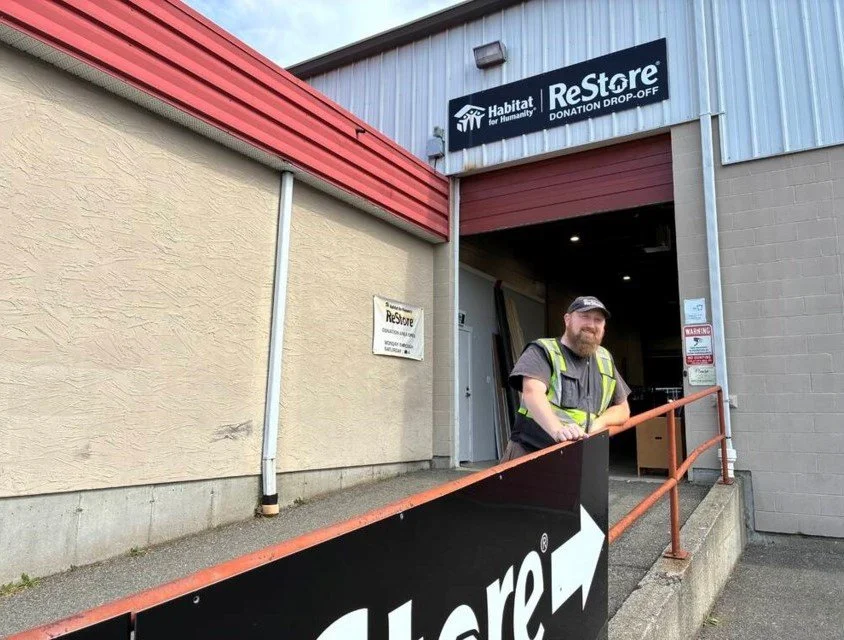
Donations have been rolling in at the Nanaimo ReStore location, says Habitat for Humanity Mid-Vancouver Island employee Nathan Rogers, who also goes out in a truck to pick up donations. JULIE CHADWICK, TIMES COLONIST
Written By: Julie Chadwick
Source: Times Colonist
When it comes to construction waste, people often think it means what’s left after demolitions, but it can also involve “hidden inventory” like surplus materials.
That hidden inventory is valuable for organizations like Light House, a Vancouver-based sustainable building non-profit where Ava Campbell works as a circular impact lead.
“If a project changes scope, or if something has been misordered, if it can’t go back to the supplier, it just kind of sits in these warehouses and these stock rooms, and companies — fair enough — tend to lose sight of it,” Campbell said.
“We’ve done so many site visits with businesses where they have that back room filled with materials that they were hoping to use and didn’t quite get around to it.”
For the last six weeks, Campbell has partnered with Habitat for Humanity Mid-Vancouver Island on a campaign asking the local construction industry to donate surplus and salvaged building materials to Habitat for Humanity’s ReStore instead of sending them to the landfill. The final push for donations ends Saturday.
Recent donations include nine skids of surplus tile from Nanaimo-based business City Tile.
Once they’re on the shelves at the ReStore, people can buy the donated materials at a discount for their home renovations, said Abigail Shakespeare, chief executive officer for Habitat for Humanity Mid-Vancouver Island.
The discount on materials can vary, but items are often in the range of 40 to 60 per cent cheaper than retail, she said.
Proceeds from ReStore sales help fund Habitat for Humanity Mid-Vancouver Island’s affordable housing projects.
Shakespeare said she’s noticed people have started to incorporate used or surplus materials in their home-renovation projects, given the increased cost of living and interest in cutting waste.
“We got this [tile] donation, and there were these really nice little hexagon tiles, and we had a couple come in and they loved the tile and they decided to use that to spearhead their entire bathroom renovation,” she said. “It’s a neat way to flip how we think about renovating, rather than it being rooted in so much waste.”
The non-profit also incorporated re-used and surplus materials from the ReStore, including trim, door handles and lighting, when it recently renovated one of its houses at 651 Second St., Shakespeare said, adding it’s now on the hunt for interior doors.
The renovation was made possible in part through the increased volume of materials the Nanaimo ReStore location has received since it expanded a year ago, she said.
“Being able to expand to a whole other bay last year has really upped our ability to not just sell more building supplies, but it was able to allow us to actually diversify the things that we sell.”
Donations are accepted at both the Nanaimo and Duncan ReStore locations, and can qualify for free pickup by Habitat for Humanity from job sites and warehouses across Vancouver Island.
Companies that donate materials can save on dumping fees and receive charitable tax receipts, said Shakespeare.
Companies that donate will be publicly recognized for their contributions and the top business donor will be announced after the annual ReStore Summer Social on Sept. 7.
The building materials exchange, or BMEx, first launched in 2024, and has since worked with more than 600 companies in the Regional District of Nanaimo.
Learn more about Light House here.
