
'Packed in': Vancouver farmers market vendors want more space, long-term infrastructure
Farmers markets have deep roots in Vancouver. As their popularity continues to bloom, vendors and organizers say it's time for them to grow.
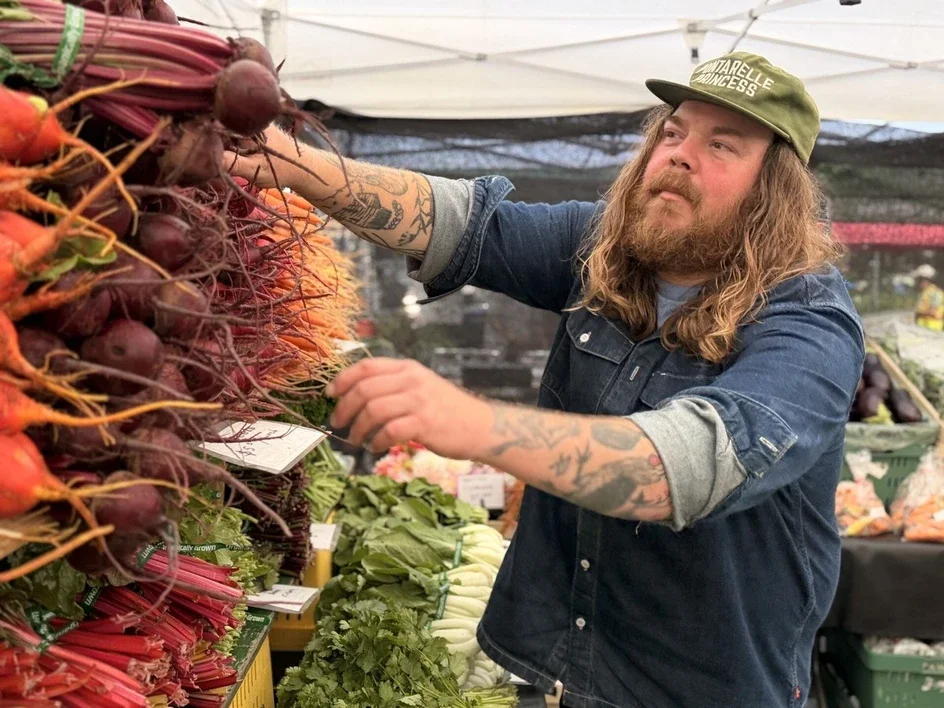
Mark Cormier of Glorious Organics at the Trout Lake farmers market on Saturday Aug. 22, 2026. The Aldergrove farmer has been asking the market for more space for several years. PHOTO BY MICHELLE SPROULE
Written By: Glenda Luymes
Mark Cormier grows food people want. Like, really want.
The lineup for his stand at the Saturday Trout Lake farmers market in Vancouver often winds out past the confines of his four tents. As the line moves, it’s hard for shoppers to browse. They might grab a gleaming eggplant or a fat bouquet of cilantro, but when they reach the till, it’s hard to go back and pick up one more perfect pepper. The stand often sells out, so customers who can’t get there early may be out of luck.
For Cormier, who runs Glorious Organics, a farming collective on Fraser Common Farm in Aldergrove, that represents a lost opportunity. He has been asking the market for more space for several years, but has been told there is no more space to give.
“I’d like to be able to bring more food,” he said. “I also care about customer experience. These are people who are trying to support the local food economy, and I want the experience to be a good one.”
With $18 million in direct sales and 675,000 visitors a year, Vancouver Farmers Market has grown from a handful of stands “squatting” in an East Vancouver parking lot to nine vibrant neighbourhood markets packed with local food, customers including chefs from some of the city’s best restaurants, live music, and an abundance of community spirit.
Just don’t expect to find a convenient place for your kid to pee.
Laura Smit, Vancouver Farmers Market’s executive-director, said the non-profit society has been asking the city for improvements such as better washrooms, water, power and accessible parking, but “we’re not getting anywhere.”
“Even maintaining the status quo is hard,” she said.
Markets, which are regulated like special events, get bumped by construction and development and sports games, despite their unique role in creating food security, local economic development and social cohesion. She wants the city to treat markets like civic infrastructure and move away from the annual permit cycle, which inhibits long-term planning and growth.
“We’re all of us problem-solvers,” she said of both vendors and shoppers.
Vendors are willing to put up with being “packed in, to the inch,” as market staff play a complicated game of Tetris in February to allocate market space based on the measurements of farm trucks and tents. At some markets, shoppers have to navigate through a “pot hole-ridden parking lot” and awkward entrances which aren’t really wheelchair accessible.
That’s not to mention the washroom issue.
Cormier said he sometimes worries about the Trout Lake farmers market being shut down because the portable toilets have been tipped over, or the handwashing station isn’t working properly.
“It seems like such a simple thing,” he said. “In a city where being healthy is promoted, why can’t we have permanent washrooms at the farmers market?”
He added, “If you can’t support your local food economy, something is wrong.”
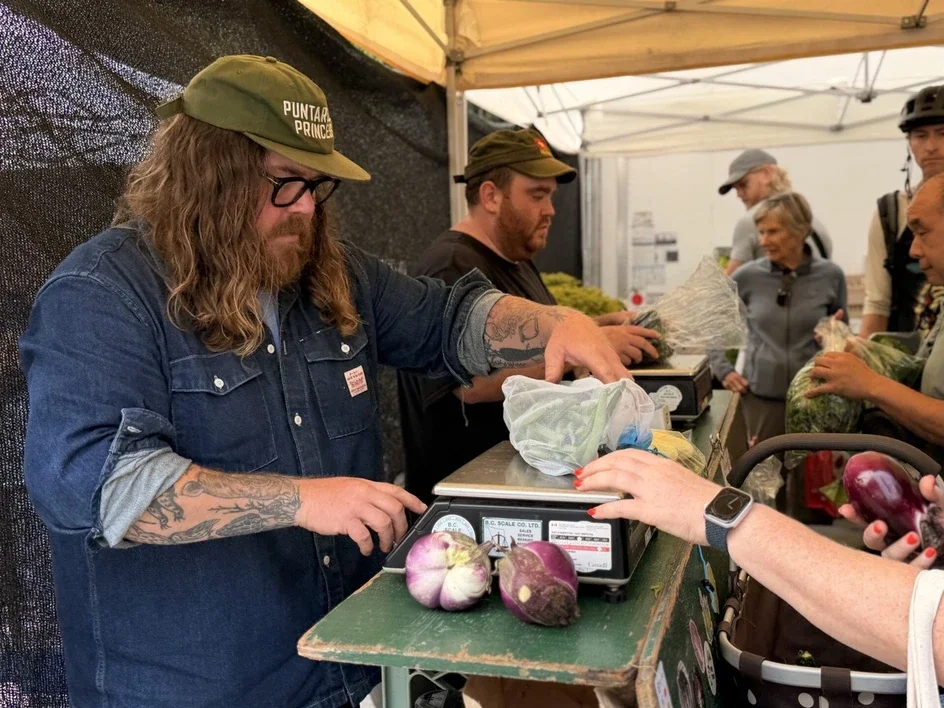
Mark Cormier of Glorious Organics at the Trout Lake farmers market on Saturday Aug. 22, 2026. PHOTO BY MICHELLE SPROULE
Smit said she sees an opportunity for the city to partner with her organization. If markets are able to secure longer agreements and aren’t treated like special events, they could help improve Vancouver’s park system and infrastructure.
“But if we’re going year to year, we’re not really in a position to invest.”
In a statement, the Vancouver Park Board said it understands the “important public benefits farmers markets bring to the community.”
The board engages with the organization during the planning for new parks and park renewals, pointing to a plaza at Riley Park to support the seasonal summer market, and a renewal plan for Trout Lake that “considers” a relocated and improved market area.
“Yes, park board staff have heard from the Vancouver Farmers Market about the type of improvements they’d like to see,” said the statement. “Requests from the Vancouver Farmers Market and other community stakeholder groups are considered in the capital planning process with specific project priorities determined by the park board.”
Learn more about Vancouver Farmers Market here.
